Morgan Buckert on Western Heritage, the Art of Leatherworking, and Making Things That Last
Morgan Buckert on Western Heritage, the Art of Leatherworking, and Making Things That Last
Ava Scanlan (Marketing & Communications Director)

From the traditions of the American West to the world of luxury leather craftsmanship, Hailey-based artist Morgan Buckert is preserving the art of making things by hand.
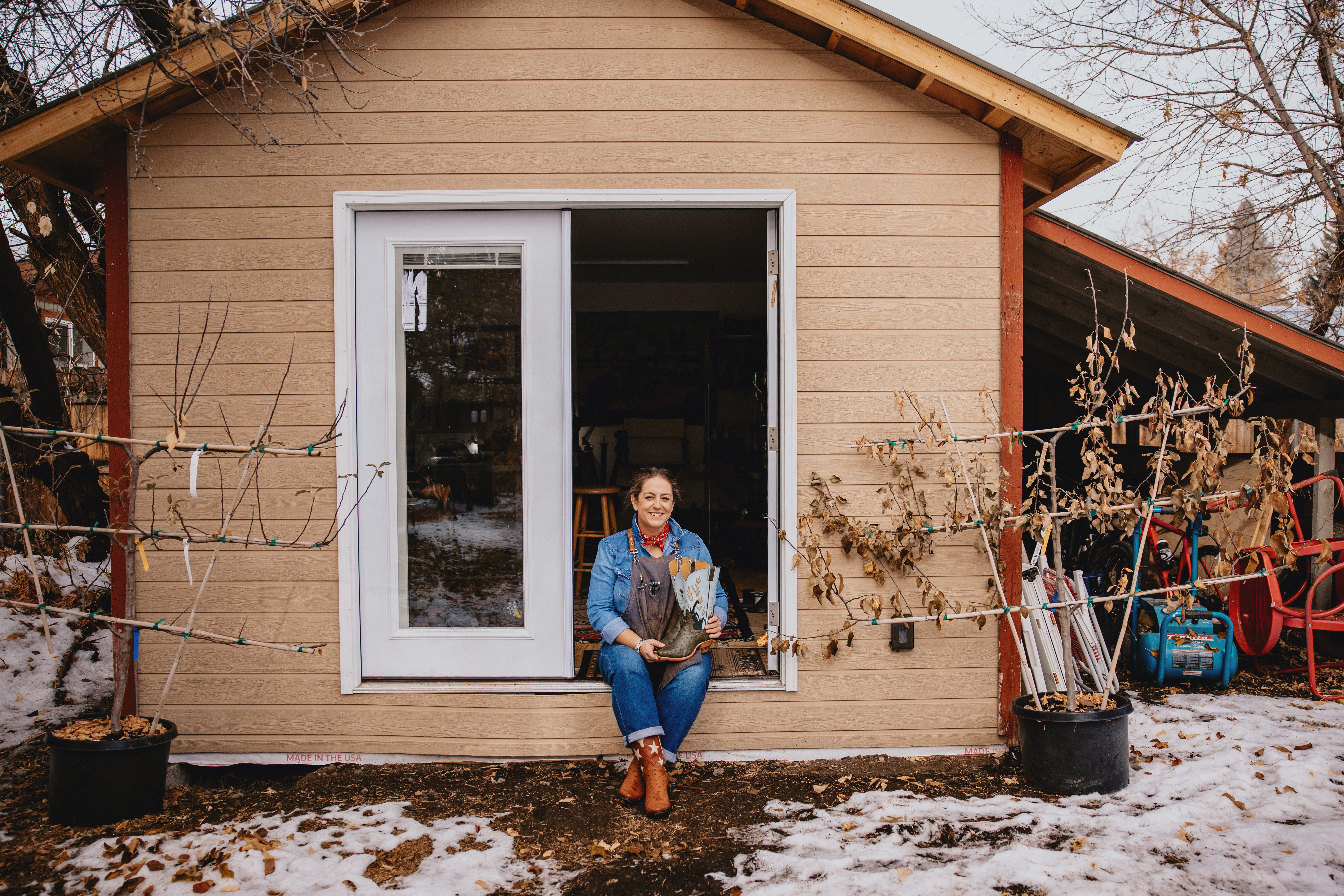
Custom cowboy boot maker, leatherworker, and Western history expert Morgan Buckert has built a practice rooted in craftsmanship, cultural heritage, and an enduring appreciation for materials. Featured in The New York Times, Buckert brings a distinctive perspective to contemporary Western craft, informed by her work with Nest and a mentorship with the renowned French luxury house Hermès.
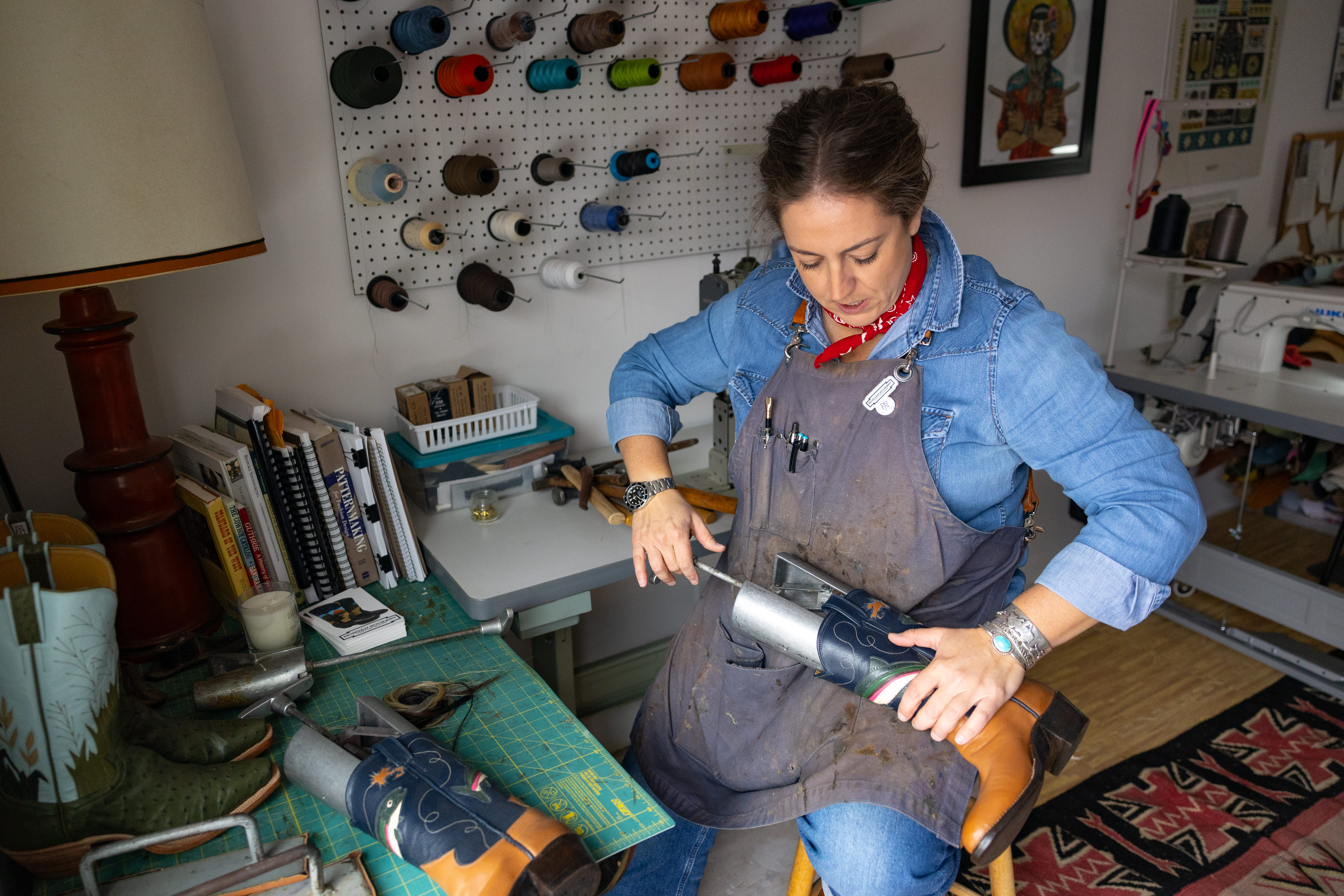
Working from her Hailey, Idaho studio, Buckert uses traditional techniques and vintage machinery to create custom cowboy boots and leather goods designed to last a lifetime. Her work was also featured in SVMoA's Idaho Cowgirl Congress, an exhibition exploring the evolving identity and culture of the American West.
This November, Buckert returns to SVMoA to lead Hand-Stitched Leather Tote Bag on Saturday November 14, a hands-on workshop inviting participants of all experience levels to discover the artistry of leatherworking and create something enduring.
Ahead of the workshop, SVMoA Voices spoke with Buckert about the history of Western craftsmanship, the value of traditional skills, and the beauty of making things that last.
Q: Your journey as a custom cowboy boot maker is fascinating. What first drew you to this highly specialized craft, and how has your interest in Western history influenced your artistic practice?
I’m the 7th generation of a Texas ranching family, and beautiful objects, like saddles, spurs, and cowboy boots, were just a part of life. My parents had custom cowboy boots, and I received my first pair for high school graduation. I was a fly-fishing guide throughout my 20s and was looking for something more. I was sewing a lot and saw the opportunity to go to a shoe making school. After day one, I was all in, and had hopes of making my own cowboy boots. I had never been so fully fulfilled—my brain was full, and my body was tired. I love making cowboy boots because of the combination of math, creativity, and brute force. I’m known for boots with mountains and wildflowers. And, I now use a ranchers tool, cowboy boots, to tell stories about conservation, and the places special to our lives.
Q: Your work has received national recognition, including a feature in The New York Times and the Heritage Craft Prize from the nonprofit Nest. What do you think is driving renewed interest in traditional craftsmanship and handmade objects, particularly those connected to the American West?
In a world of fast fashion, Amazon, and now AI, people are grasping for something real, something meaningful. Shoemaker used to be one of the most common jobs in the world and now it’s pretty rare. It’s special to have a truly bespoke experience. This is slow, real work, and people want to experience that, and get to tell their story through cowboy boots. What’s more American than to be a cowboy. Western culture is experiencing one of its longest periods of popularity, and I think one of the driving forces behind that, besides Beyonce and the show Yellowstone, is that work like mine is so deeply personal, and strongly connects people to place.
Q: You've been involved with Nest, an organization dedicated to supporting artisans and preserving craft traditions around the world. Can you tell us about that experience and how it has shaped your understanding of the cultural and economic importance of handmade goods?
Nest works with craft artists around the world, connecting them to business education and opportunities—they are truly changing the world. I’ve connected with people from around the country ensuring that their cultural traditions endure. Providing small businesses with what they need to succeed, and connecting them to opportunities to sustain their craft makes our world a more beautiful place. From handmade baskets on the shelves of Target to upcycled garments made from Southwest Airlines leather seats, to my bespoke cowboy boots, there is space for all of us, and the joy of surrounding yourself with beautiful handmade objects.
Q: You also had the opportunity for a mentorship with Hermès, one of the world's most celebrated luxury leather houses. What did that experience teach you about craftsmanship, precision, and the relationship between maker and material? How did it influence your own work?
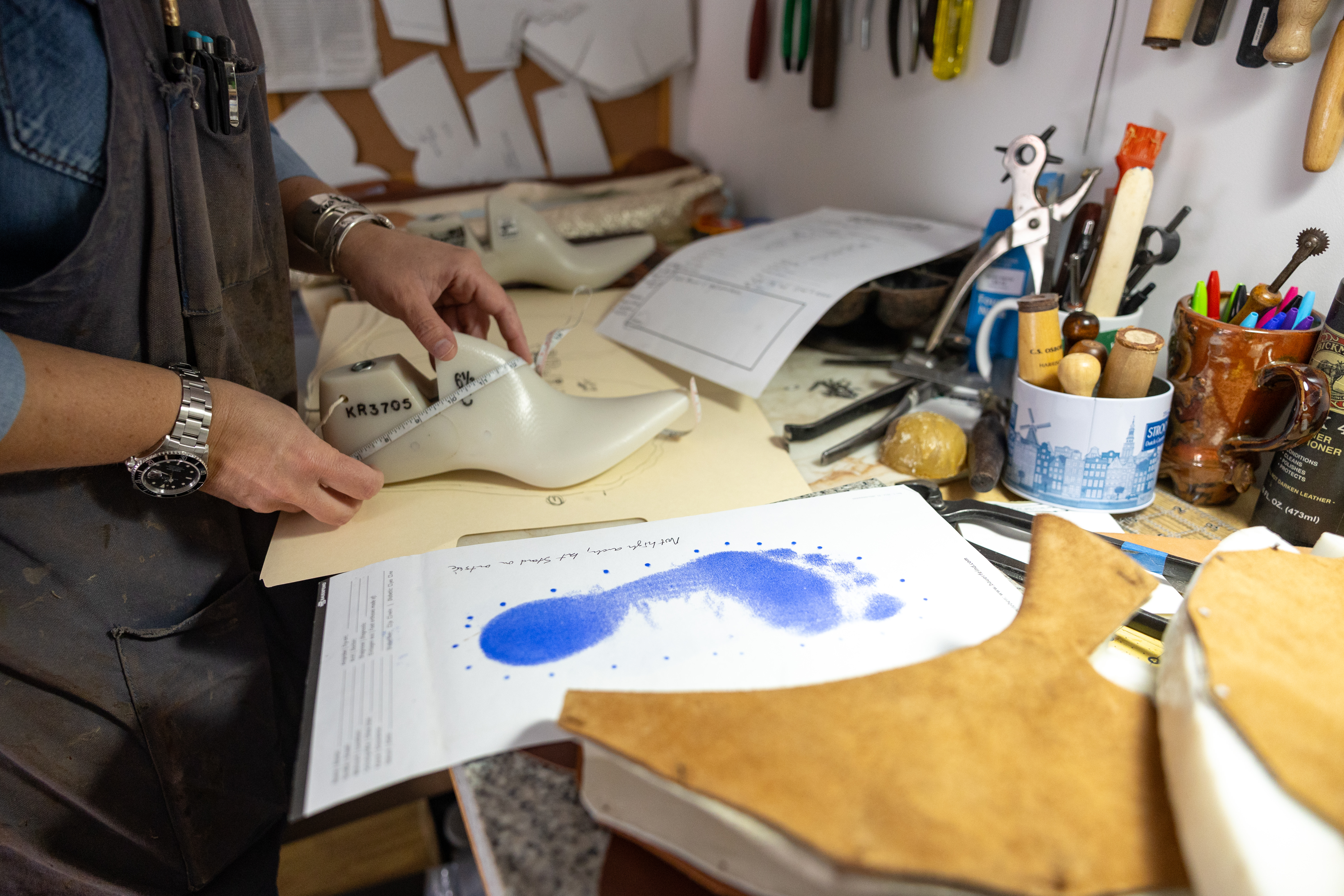
The Hermes team are delightful and passionate about their work. Hermes is one of the few independently owned luxury houses and their commitment to craftsmanship is unsurpassed. People make everything we wear, but Hermes makes sure that consumers know about the hands who make that work and the dedication to become a master craftsman. I was really surprised that through my experience, my takeaway was to tell the story about the physical work that I do. It’s physically challenging--I’m often hammering, coaxing leather into a shape it resists, and reducing my tolerances, working harder to improve my craft with every pair I make. I’m not sure that people have ever thought about how footwear is constructed, but cowboy boots have over 300 steps. It’s not easy, but it fills my cup like nothing else.
Q: Cowboy boots occupy a unique place in American culture, combining function, fashion, and identity. As a Western history expert, what do you find most compelling about their history, and what do they reveal about the evolution of the American West?
I LOVE this question. Cowboy boots are uniquely American, which is hard to say about almost anything. Cowboy boots were invented in a tornado of activity in the North Texas-Oklahoma- Kansas corridor during the cattle drive days, about 150 years ago. They are a melting pot of influence from German riding boots from the east, Mexican boots from the South, and cowboy dandies with a little jingle in their pocket at the end of the trail. They are the perfect symbol of people seeking adventure or escape in creating something specific to place. Boots have evolved to physically cooperate with place or respect cultural influences. Whether in the high heels of the Idaho Buckaroos who were influenced by California Vaquero culture. Or the loose, low heels of the coastal grasslands of my culture on the Coastal Bend of South Texas, or the Dallas Cowboy Cheerleaders, or lots of things in between.
Q: Your leather goods are made to last a lifetime. In a culture increasingly defined by mass production and disposability, what does it mean to create something intended to be used, repaired, and passed down through generations?
In a culture of more is more, I think there’s nothing more luxurious than something that lasts. You can have one bag, made from American leather from American cows, that’s a byproduct from American beef, completing the supply chain (and leather is even starting to be traceable), that will last through three, four, or five similar bags made of some sort of plastic, likely made with exploitative labor, that will fall apart, but never really goes away. I think choosing to acquire objects that last means committing to long-lasting style choices, as well as making sure that leather is moisturized, and you can find someone to help with repairs. I have handbags from both of my grandmas that I still use and all I have to do is occasionally condition them. I hope that some of my boots will be repaired and passed on to the next generation to be enjoyed and remind the wearer of someone important to them.
Q: Your work was featured in SVMoA's Idaho Cowgirl Congress. How has living and working in Idaho shaped your identity as an artist and your relationship to Western culture?
I was delighted that SVMoA hosted the Idaho Cowgirl Congress and featured the work of some truly exceptional Idaho women. I have to say that support from the Idaho Commission on the Arts and Steven Hatcher, has been key to gain the tools I needed to become a cowboy boot maker, especially supporting my first apprenticeship with Seth Teichert in MacKay. Western culture, and ranching, to me, is about connection to the land. Place supports our ability to raise cattle, or grow food. Knowing the birds, plants, soil, and peaks brings it all together. I moved to Idaho to fly-fish, and though I like to say that I now ranch trout and snow instead of cattle, understanding and appreciating our surroundings, is what makes me a Westerner, and is what makes my cowboy boots Western. My very first day of work was going birding on Silver Creek Preserve, and the first bird I saw was a sand hill crane. It was May, and I was used to the cranes arriving in November—a sure sign winter was on its way. That bird connected my ancestral home with my chosen home and has been a connector for almost all my life now. I even just made myself cowboy boots with sand hills to commemorate that deep connection.
Q: In your upcoming SVMoA workshop, participants will work with American-tanned Horween leather that has been rejected by large manufacturers. What makes this leather special, and how can its imperfections become part of the beauty and individuality of a finished piece?
As I mentioned earlier, Horween is one of the few American tanneries. They’re in Chicago, have been operating since 1905, and complete the supply chain, using a byproduct to make superb, hearty leather that breaks in nicely and lasts forever. Large buyers reject any imperfections because they don’t have the ability to pivot around them, but if I’m buying hides five or ten at a time, I can change my pattern, or move something around to avoid a brand or a tear, or even highlight them. I am always thrilled when I buy a hide that has a brand still visible—that scarring connects me with a ranching family just like mine. These one-offs mean that I also get to acquire some really special things not generally available to the public, like actual football leather, which has the absolute best texture.
Q: For someone who has never worked with leather, what can they expect from the workshop? What is most rewarding about teaching people to create something entirely by hand?
Creating something you made yourself is so special. I love when I get a compliment and I can say “I made it myself!” This class illustrates that you don’t need a lot of fancy tools or special equipment to make a luxury item, but the class is physically challenging—it can be hard on the hands, arms, and legs. I love that this class opens up a world of opportunity to creating long-lasting accessories for yourself, or for gifts for friends and family.